
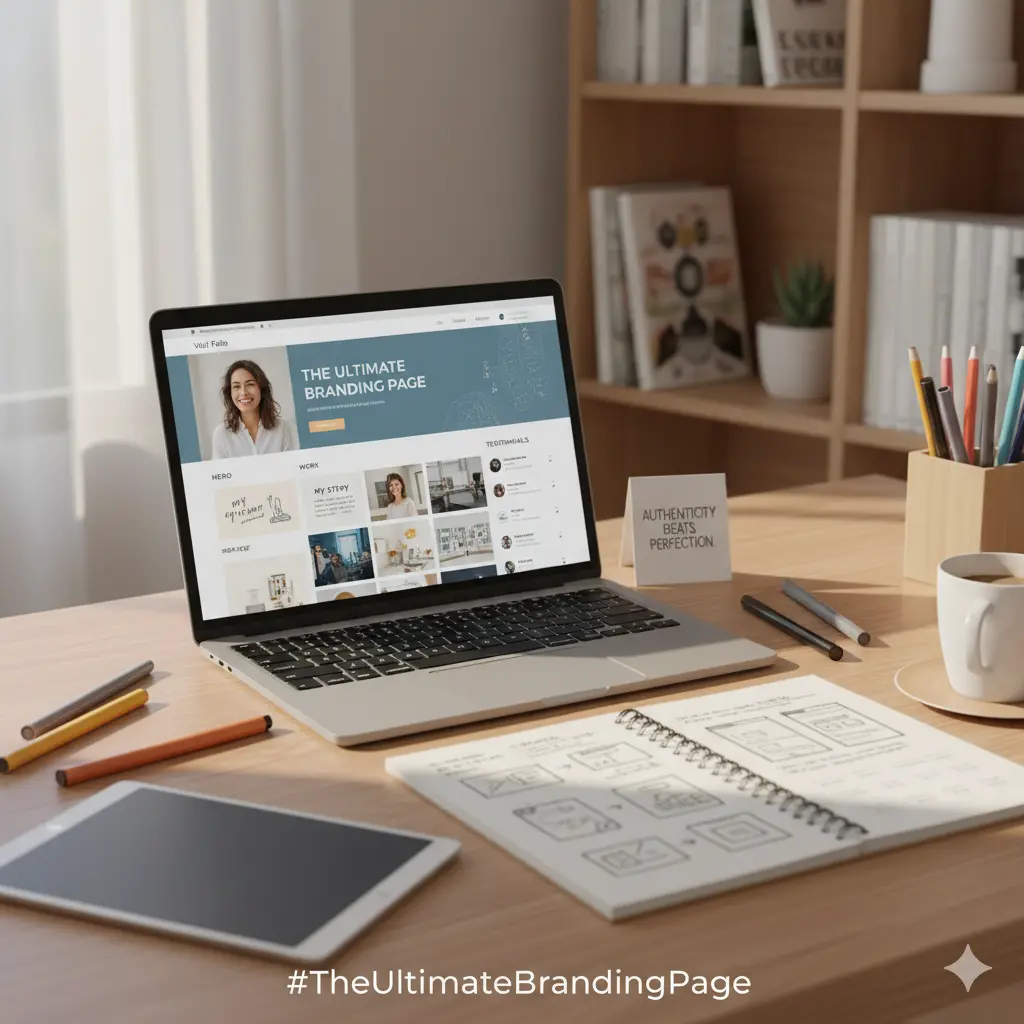
Ever landed on someone’s website and instantly thought, “Wow… they’ve got their stuff together”?
Yeah. That moment doesn’t happen by accident. It’s the magic of a well-crafted branding page—the page that silently builds trust before you ever speak to a client.
I’ve redesigned mine at least four times. Maybe five. Honestly, I lost count somewhere between tweaking fonts and rewriting my bio at 2 a.m. But every version taught me what really matters.
And today, I want to share everything I wish I knew earlier.
Also, if you want an easy place to build your own pro-level branding page, check out this portfolio builder I keep recommending to friends. Makes life so much easier.
Your hero section is the first handshake. The vibe. The “trust me, I know what I’m doing.”
But so many creatives dump a generic headline like:
“Hi, I'm John. A designer.”
Okay John, but who are you really?
One of my friends (a wedding photographer) changed her headline from “Capturing Timeless Moments” to:
“I help couples freeze the happiness they’re scared to forget.”
She messaged me saying bookings went up the same week.
That’s the power of saying something real.
If you need layouts that don’t look like a 2012 WordPress theme, you can grab pre-built blocks from this creative portfolio site. Seriously saves time.
Here’s a small confession: I used to hate writing my story section.
Because I thought it needed to sound “professional.”
Big mistake.
People want feelings, not bullet points.
Let me give you a quick example.
A few years ago, I met a young illustrator at a workshop. She told me she got into art because she grew up in a tiny apartment where she used the walls as sketchpads. Her mom didn’t scold her—she framed her first doodle like it was a Picasso.
She put that story on her branding page.
Clients adored it.
Authenticity beats perfection every single time.
If writing isn’t your strong suit, some templates on this online personal branding platform give you writing prompts that help a lot.
You don’t need 50 case studies.
You need 3–5 great ones.
But here’s the thing: don’t just dump images.
Explain:
what the client needed
what you did
why it mattered
I once helped redesign a brand for a local café. They wanted a “modern but cozy” look. Not easy. Modern and cozy are basically opposites. But we pulled it off. The owner told me customers stayed longer because “the space feels calmer now.” That’s a result worth writing about.
If you don’t have a place to display case studies cleanly, go grab a template from this portfolio website solution—it handles galleries beautifully.
People love people.
We believe what others say.
So if you have:
testimonials
screenshots
video thank-yous
media mentions
Use them.
Tip: screenshot testimonials instead of copy-pasting them. It feels more authentic. I started doing that after a client casually said, “It’s nice to see real screenshots—it feels less edited.”
If you need an easy testimonial slider, the creative business website builder I use has it built-in. No plugins. No crying over code.
This part is underrated.
Imagine a client scrolling through thinking:
“Will this person be a nightmare to work with?”
Answer that fear upfront.
Tell them:
how you communicate
how your process flows
how long things take
what clients usually appreciate
I added a small line to mine:
“I send weekly updates so you never wonder what's happening behind the curtain.”
Three clients said they hired me because of that.
Want a preset format for this section? The personal brand site creator includes one you can tweak easily.
Clients love to know what tools you use. But don’t turn it into a NASA control panel.
Just list:
the relevant tools
your strengths
certifications (if any)
Keep it human.
Keep it honest.
A developer friend once wrote “Fluent in JavaScript, sometimes fights with CSS.”
Clients loved it.
It showed skill and personality.
If you need a simple builder that has skill bars built in, this modern portfolio maker has solid options.
Please don’t end with:
Contact me for more information.
That’s cold. Lifeless.
Try something warmer:
“If you think our vibes match, message me. I’d honestly love to hear what you’re building.”
A branding page isn’t a billboard.
It’s a conversation starter.
You can embed your contact form or link your booking calendar using the best portfolio page creator—super convenient.
Your branding page should include:
Hero section with personality
Authentic story
3–5 case studies
Strong visuals
Real testimonials
Your creative process
Skills + tools
Clear CTA
Optional: downloadable brand kit or media kit
If you want a place where all these pieces “just fit,” check out this creative portfolio tool. Plug, play, publish. Done.
Every time I refine my branding page, I learn something new about myself.
Sounds cheesy, I know. But it’s true.
Your branding page isn’t just for clients.
It’s a mirror. A reminder of what you’ve built and what you’re capable of.
And if you’re just starting out, don’t wait until things feel “perfect.”
Start messy.
Fix it along the way.
That’s what all of us do—yes, even those fancy creatives you admire.
You’ve got a story.
Tell it in your own voice.
And build a page that feels like home.